

Woman Shoved Aside After Blocking ICE Vehicle Outside Broadview Facility
By Abdullahi Mukhtar Algasgaini
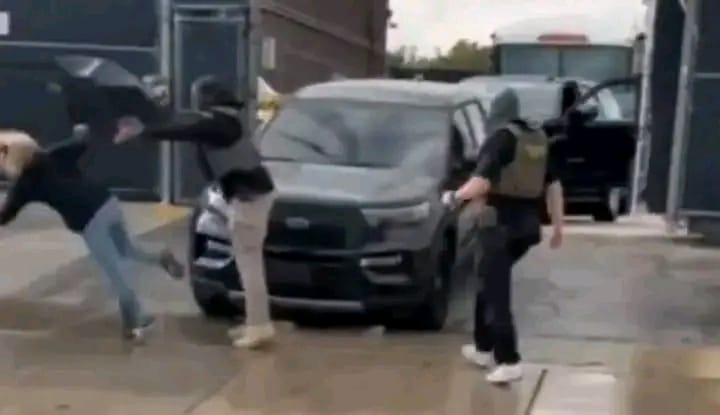
A woman was shoved to the ground after standing in front of a black ICE SUV outside the Broadview processing facility, according to video of the incident circulating online. The footage shows the woman holding an umbrella and standing directly in the vehicle’s path before an agent in a tactical vest approached and pushed her aside. She fell onto wet pavement.
The video does not show any prior confrontation before the push. It also does not show the agent continuing force after she fell; he appears to move on as the vehicle proceeds.
Supporters of the agent’s actions argued that blocking a federal law enforcement vehicle during an operation is unlawful interference and that officers may use reasonable force to clear an obstruction. They cited 18 U.S.C. § 111, which covers interference with federal officers, and said the woman refused repeated instructions to move.
Critics, including former Rep. Joe Walsh and other commentators, described the push as excessive and raised 18 U.S.C. § 242, the federal civil-rights statute. They argued the footage shows unnecessary force against a protester.
The incident has renewed debate over protest rights and physical obstruction of immigration enforcement operations. ICE has said its officers are carrying out lawful enforcement duties, while activists say they are exercising free speech. The woman’s identity and whether any charges were filed were not immediately clear.
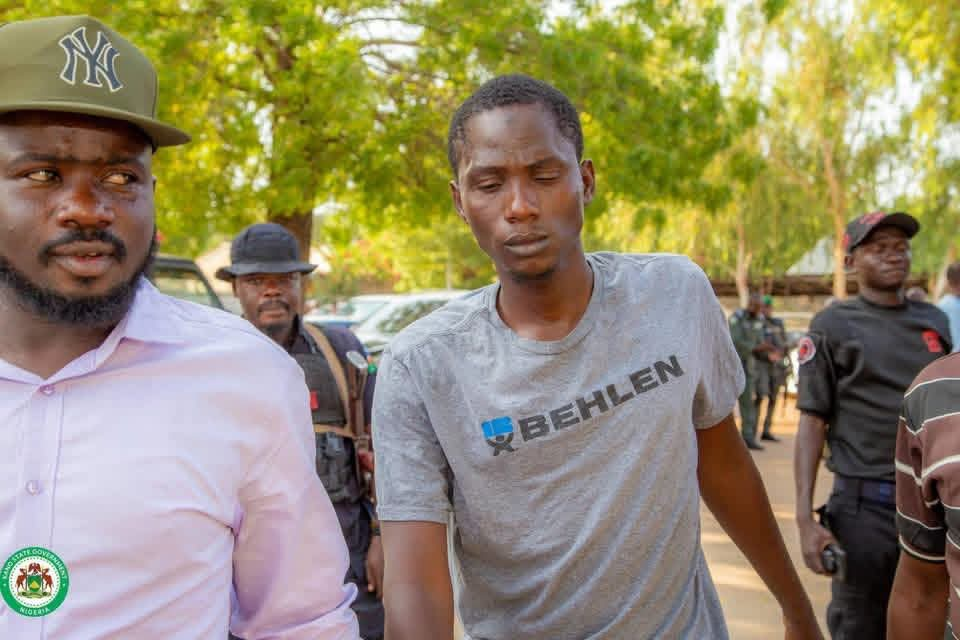
How Kano Task Force Arrests Notorious Gang Leader in Port Harcourt
By Uzair Adam
The Kano State Multi-Agency Task Force on Drug Abuse and Illicit Trafficking has arrested a suspected gang leader, Ishaq Lawan Ibrahim, popularly known as Malam Keya, in Port Harcourt, Rivers State.
The 27-year-old suspect was allegedly responsible for orchestrating violent clashes among rival gangs in several communities in Dala Local Government Area of Kano State.
The Daily Reality gathered that Ibrahim, a native of the Yelwa area of Dala, fled Kano for Port Harcourt after the task force intensified its crackdown on street gangs following repeated incidents of violence in the area.
He was allegedly involved in gang-related activities in Jakara, Madigawa, Yalwa, Sanka, Kul Kul, Dogon Nama, Kuka Bulukiya, Dala, Shatsari and Dandalin Turawa, among other communities across Kano metropolis.
In a statement, the task force said it tracked and arrested the suspect in Port Harcourt following credible intelligence.
The operation was coordinated by the task force’s Head of Operations, CSP Bashir Gwadabe, who led the team responsible for the arrest and subsequent transfer of the suspect to Kano.
Confirming the development, the task force chairman, Muhuyi Magaji Rimin-Gado, said Ibrahim remained in custody and would undergo further investigation before being charged to court.
Rimin-Gado described the arrest as a demonstration of the agency’s determination to track down wanted suspects regardless of where they might be hiding.
He warned individuals allegedly sponsoring violence and criminal activities in Kano against believing they could escape arrest by relocating outside the state.
“Let me assure you that those who bankroll violence should know that no distance and no hiding place will protect them. This arrest is only the beginning. We will not rest until peace is fully restored,” he said.
The chairman further assured residents that the task force would sustain its operations within the confines of the law, ensuring that all suspects were subjected to due process.
He said the agency was committed to dismantling criminal gangs, identifying their sponsors and disrupting drug supply networks allegedly fuelling violence across the state.
Rimin-Gado also called on residents, community and religious leaders, parents and young people to support the campaign against thuggery and drug abuse by reporting suspicious activities to security agencies.
He urged parents to closely monitor their children and remain vigilant about activities within their neighbourhoods.
“You should also refuse to be used by anyone to disturb the peace of our dear state. Safety of Kano is a shared responsibility, and together we will reclaim our streets and secure the future of our state,” he said.
The task force acknowledged support from the Kano and Rivers State police commands, along with other law enforcement agencies, in facilitating the operation.
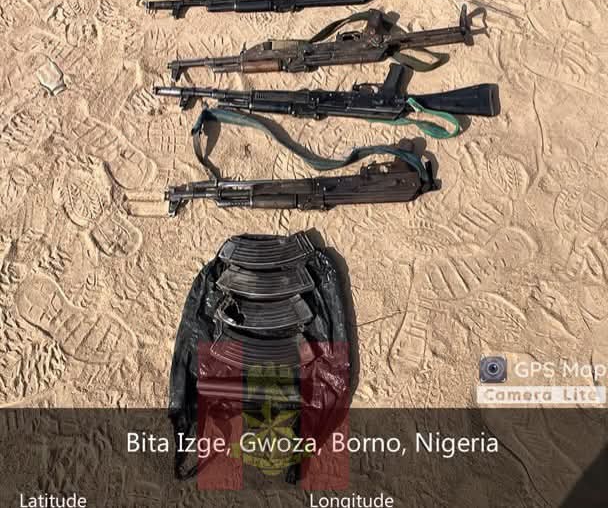
COAS’ First Year in Office: Terrorists Suffer Major Defeat as Nigerian Army Neutralises 48, Recovers Large Cache of Arms in Borno, Yobe
By Muazu Muhammad
As the Chief of Army Staff (COAS), Lieutenant General Waidi Shaibu, marks his first year in office, the Nigerian Army has recorded another significant operational victory against insurgents, neutralising 48 terrorists and recovering a large cache of weapons and ammunition in Borno and Yobe States.
The latest successes followed the foiling of coordinated attacks by Boko Haram and Islamic State West Africa Province (ISWAP) terrorists on military positions in Bitta, Gwoza Local Government Area of Borno State, and the North East Theatre Training School (NETTS), Buni Yadi, Gujba Local Government Area of Yobe State.
The operations, which took place between October 29 and 30, 2026, further demonstrate the Nigerian Army’s sustained offensive against terrorist groups and its determination to deny them freedom of action across the North East.
In Bitta, troops of the Joint Task Force, North East, Operation HADIN KAI, successfully repelled an attempted terrorist assault on the night of October 29. The combined response of ground troops and air support overwhelmed the attackers, disrupted their advance and inflicted heavy casualties.
In a related operation, troops launched a decisive counter-offensive against a large concentration of ISWAP fighters who attacked NETTS Buni Yadi between the night of October 29 and the early hours of October 30.
The approximately five-hour engagement was coordinated by the Theatre Command, with effective integration of Intelligence, Surveillance, Target Acquisition and Reconnaissance (ISTAR) capabilities, alongside air and ground assets.
The counter-offensive resulted in 48 terrorists being neutralised, while troops recovered a substantial cache of weapons and ammunition.
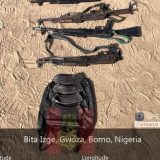
Items recovered include 42 AK-47 rifles, five PKT machine guns, four General Purpose Machine Guns (GPMG), one 60mm mortar, 105 AK-47 magazines and two video cameras.
The recovered ammunition comprises 30 rounds of 12.7mm armour-piercing incendiary ammunition, 2,738 rounds of 7.62mm special ammunition, 223 rounds of 7.62mm NATO ammunition and 2,054 rounds of PKT ammunition.
Despite the operational successes, the engagements came at a cost, as one soldier paid the supreme sacrifice, while two others sustained minor injuries and are responding to treatment.
The military commended the courage and resilience of the troops, noting that their morale remains high as operations against terrorist elements continue across the theatre.
The latest victories come as Lieutenant General Waidi Shaibu approaches his first anniversary as Chief of Army Staff, providing further evidence of the Nigerian Army’s sustained commitment to strengthening operational effectiveness, improving coordination and intensifying pressure on insurgent groups.
The heavy losses suffered by the terrorists and the recovery of their weapons and ammunition represent another significant setback to their operational capabilities.
As the Nigerian Army sustains its offensive operations, the latest developments reinforce its determination to restore lasting peace and security across the North East and other parts of the country.
The operational successes were disclosed in a statement issued on October 30, 2026, by Captain Mohammed Goni, Acting Media Information Officer, Headquarters Joint Task Force (North East), Operation HADIN KAI.
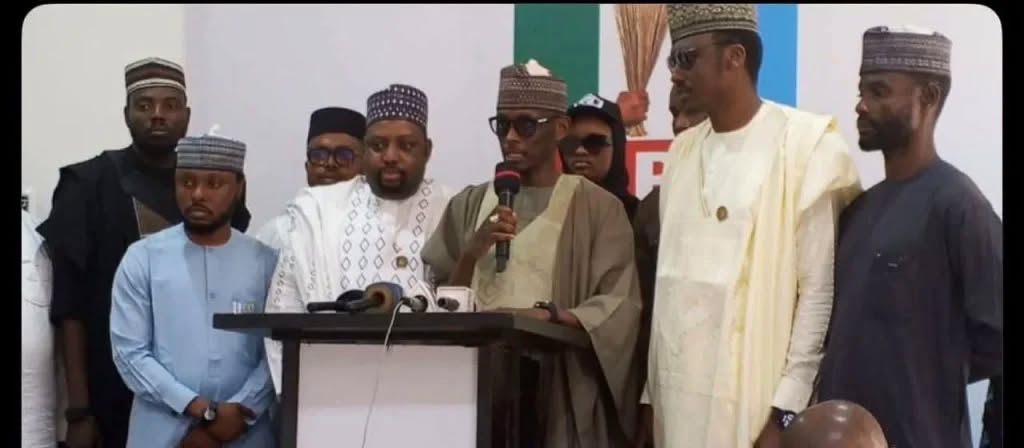
Atiku’s Son Pledges 10 Buses for Tinubu’s 2027 Campaign
By Hadiza Abdulkadir
Abba Atiku Abubakar, son of former Vice-President Atiku Abubakar, has pledged 10 buses to support President Bola Tinubu’s re-election campaign ahead of the 2027 general elections.
Abba made the pledge during a visit to the All Progressives Congress (APC) National Secretariat in Abuja on Friday, where he was received by the party’s Deputy National Chairman (North), Bukar Dalori.
According to a statement by Yusi Buba, an APC aide, Abba expressed support for Tinubu’s administration and announced the donation to boost the party’s mobilisation efforts.
The pledge followed his unveiling of the Haske Bola Tinubu Organisation, a support platform through which he plans to organise a two-million-man mobilisation march across the country’s six geopolitical zones.
Abba defected from the Peoples Democratic Party to the APC in January. His father, Atiku Abubakar, is the presidential candidate of the African Democratic Congress (ADC) for the 2027 election.
On the Unintended Impact of Health Insurance
By Oladoja M.O
Encouraging is an understatement when you consider how far we’ve come in health insurance coverage in Nigeria. It’s pleasing to see health insurance gradually becoming a bigger part of Nigeria’s healthcare conversation. More people enrolling, more attention to coverage, and the ongoing expansion and adjustment of health insurance programmes all point in one direction: we are taking financial protection in healthcare more seriously.
For a country where illness can quickly become a financial crisis, this is certainly worth celebrating.
But while we celebrate the numbers, we should also ask: what happens when the insured person actually walks into a hospital?
There appears to be an emerging culture around insured patients that we should not allow to become normal.
You hear it in the phrase, “they are under HMO.”
Some patients have experienced delayed attention, dismissive attitudes and poor communication simply because their care is being financed through insurance. There are stories of patients being made to feel like a burden because someone else, rather than the patient standing in front of the provider, is paying the bill.
A social media post that circulated recently brought this into the open. Someone associated with a healthcare facility made a derogatory remark about a family who had come to receive care under health insurance.
The concern isn’t just the statement, but the thought of what those people and many others may have experienced before that statement ever appeared online, and the comments under the post so proved a lot that people had been put through.
That was the one that became public.
How many others never do? An this is where health insurance meets something much deeper in our society: classism.
We already know that the ability to pay can influence how people experience healthcare. Health insurance is meant reduce that inequality, not create another label through which patients are treated differently.
And to note, quality of care is not just about eventually receiving treatment. It includes how the patient is received, how long they wait, how they are spoken to and whether they retain their dignity while receiving care.
Hearing from both sides, healthcare providers do have legitimate concerns about the economics of health insurance. Tariffs vs actual treatment cost, uncertainty of reimbursement, etc., factually, running a healthcare facility is expensive, and particularly for private providers, sustainability cannot be ignored.
But while these are legitimate concern, it is a big problem when the gap is pushed down to the patient.
There are concerns about patients being asked to make additional payments even when the service is covered by their insurance, attempts to recover inadequate reimbursement through duplicating charges or claiming for services a patient did not actually receive, and patients routinely being asked to pay part of the cost even when the treatment falls within their insurance coverage.
Yes, this is not to indict healthcare providers, but we can all agree that these concerns are too important to ignore.
When the provider and insurer disagree about the cost of care, the patient should not quietly become the person who settles the disagreement.
I remember asking a question during a session at the maiden African Primary Health Care Forum in 2025, that how do we balance healthcare provision with the intention to make profit, without allowing profit to override the people who should remain at the centre?
Unfortunately, there was no easy answer. Truthfully, it is tricky.
Providers need to survive, insurers need to remain financially sustainable and government cannot carry every cost in the health system. Yet somewhere between these competing interests is the person who became sick in the first place.
This is why the response cannot simply be “let’s increase the tariffs” or “let providers absorb the loss.” Neither is sustainable. If tariffs rise without considering the wider financing burden, patients may eventually bear the cost. If providers continually operate below sustainable levels, quality of care will suffer.
And that’s why there’s need for a dive at whole financing structure.
The government needs to examine the real costs and obligations of healthcare provision and identify where targeted fiscal relief or support can ease pressure on providers without simply shifting it to patients. Insurers must reimburse realistically. Providers must be allowed to remain viable, but must also remain accountable for what they provide and claim.
Monitoring must become active!
Where systems have gaps, people will eventually find ways to exploit them. Claims should be monitored. Unusual billing patterns should raise questions. Services billed should correspond with services delivered. Patient complaints should not disappear into administrative files, and repeated non-compliance should have consequences.
This is not about setting providers against insurers. Everyone has a part to play.
The government must regulate and create an environment where healthcare financing is sustainable. Insurers must protect the integrity of the pool and pay fairly. Providers must deliver quality care without making patients pay for every weakness in the system. Patients must also understand their rights and speak up when something is wrong.
The point is not to remove profit from healthcare. That is neither realistic nor desirable. The point is to ensure that profit does not become more important than the person healthcare is supposed to serve.
That is the balance we need.
Because ultimately, the success of health insurance should not be measured only by how many people have been enrolled.
It should also ask what those people experience when they finally need care, if the insurance actually protects them, if they can walk into a facility without being treated as a lesser patient because they are “under HMO”, if they receive the care they are entitled to without becoming the financial solution to a disagreement between provider and insurer?
Expansion of health insurance in Nigeria must weigh in on these questions.
We are still building this system, and that gives us an opportunity to correct what is beginning to go wrong before it becomes normal.
Health insurance is too important to lose the very person it was created to protect.
The patient must remain at the centre, not at the receiving end of the system.
And the unintended negative stretches of this beautiful system must be confronted and, while we still can, nip in the bud.
Oladoja M.O. (Oladoja Mark Olamilekan) writes from Abuja and can be reached at: mayokunmark@gmail.com.
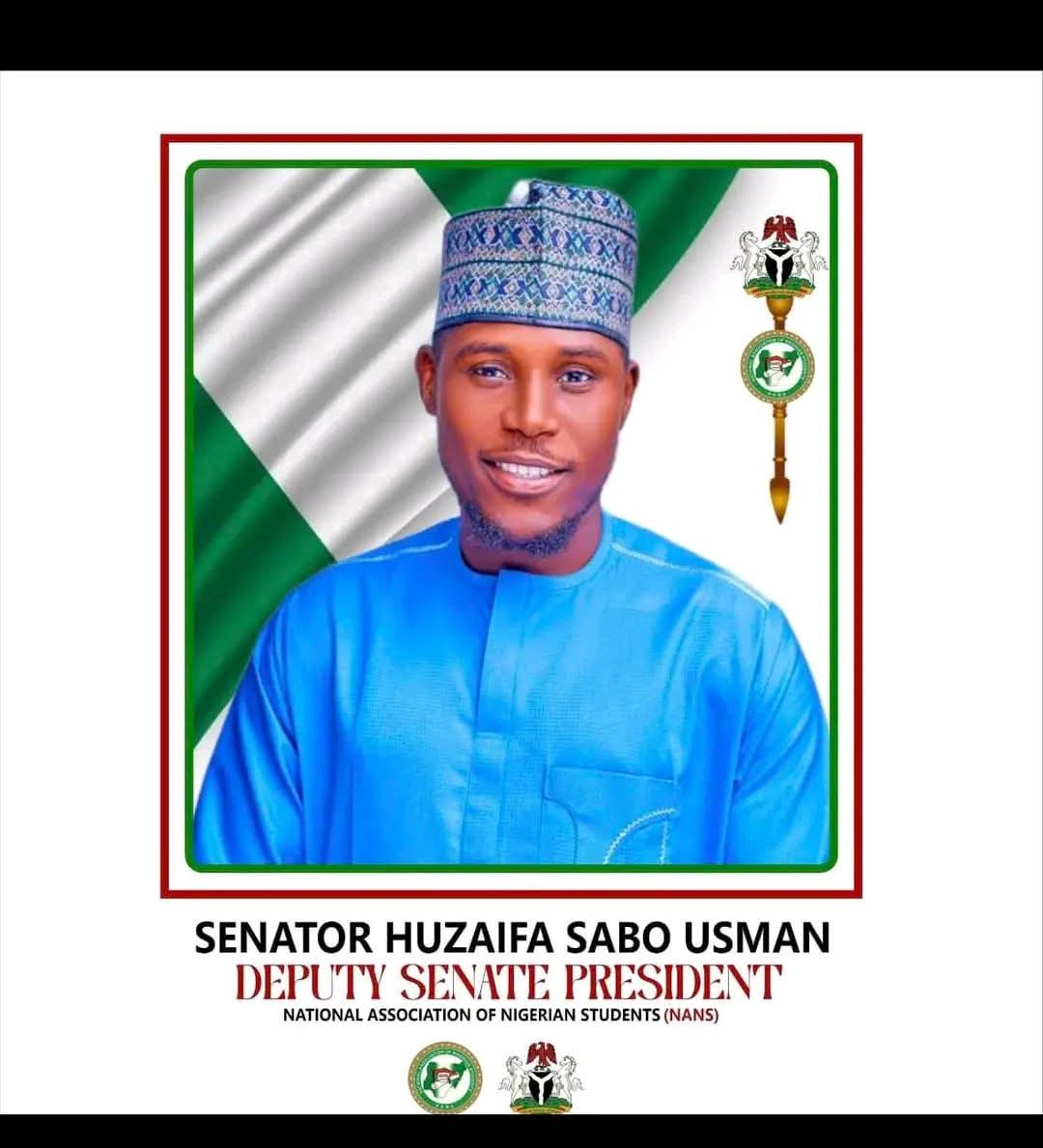
Adieu, Brother Huzaifa Sabo Usman
By Fatihu Ibrahim
Inna lillahi wa inna ilaihi raji’un.
I don’t know where to start. I am literally in tears. I still cannot fathom the reality and fragility of life.
Huzaifa is no more. Ya Allah! 😭
I can’t remember the exact first day I met Huzaifa, but I remember seeing him from afar during our 100 Level days. He was just a normal classmate to me then. We weren’t particularly close.
We started getting closer in 200 Level through Abdul Aziz Ahmad Malam Boy, our mutual friend.
We were in the same room in 200 Level, Room 64, the last room in Area One Hostel. Our room was right beside the hostel mosque, and we always joked about being “Baƙin Allah” (Allah’s guests) because we lived right beside the mosque.
Huzaifa lived across the hall, about five or six rooms away from ours. If I remember correctly, he was Malam Umar Sale’s roommate in the Department of Animal Science. They used to visit our room frequently, and since almost all of us were classmates, there were four Agriculture students in the room. Our room eventually became a mini headquarters where we studied, played and spent time together.
Huzaifa was a very calm and reserved person.
Most times, we would get caught up in some banter, and I would use my naturally superior talkative nature to bash Huzee in an argument. Even when he clearly had the better point, he would simply nod, smile and say:
“Fatihu, kai ko…? Ba a cinka da zance.”
I would laugh in triumph and respond:
“Dama na faɗa maka.”
Those little moments are memories I never knew I would one day desperately wish I could have again.
Huzee loved his family more than anything.
I have never met most of his siblings, except his sister, but somehow I knew all their stories. You could hardly spend an hour talking with Huzee without hearing about his younger brother, Sauban.
“Sauban did this… Sauban did that…”
Ya Allah.
I cannot even begin to imagine what Sauban is feeling right now.
I remember one day when we left Wudil together in the company of friends. As we reached Kano Line, Yahaya Rabi’u Abdullahi (Kundaz), in his usual banter, was trying to piss Huzee off.
His immediate younger sister, Khadija, if I remember correctly, came to welcome him and greeted us. Kundaz, just to provoke him, told Huzee point-blank that he loved his sister.
Huzee simply smiled and said:
“Zan ba ka number ɗinta.”
Whenever Kundaz wanted to tease him afterwards, he would ask:
“Kai, ina budurwata?”
And Huzee would just smile and say:
“Tana nan lafiya.”
That was Huzee. Calm, reserved and patient. Even when we were joking with him, he rarely got angry.
When he decided to venture into student politics, Malam Boy and I were firmly against it. His Level 2 result, whether it was first or second semester, I can’t remember exactly, was above 4.0, and we didn’t want politics to distract him from his studies.
But Huzee had a way of making you eventually agree with his point. He would calmly explain himself until you found yourself thinking, “Maybe this guy actually has a point.”
And no matter how intense the political rivalry became, Huzee never treated you as an enemy. That was one of the things I admired about him.
I still remember him complaining to me:
“Fatihu, ba ka da mutunci. Kana Gwammaja amma ba ka faɗa min inda kake ba. Rannan na zo wajen Siya-Siya. When I come next, dole mu haɗu.”
I never imagined that one day, those words would become a memory.
Perhaps what makes this loss even more painful is that this is not the first time we have had to say goodbye to someone from our circle.
Years ago, we lost another friend and classmate, Anas Rano. I thought I had somehow learned to live with that pain, but Huzee’s death has brought it all back. It is as though an old wound has suddenly been opened again.
One moment, you are young students sharing classrooms, hostels, jokes, arguments and dreams for the future. You never imagine that some of the people making those memories with you will one day become memories themselves.
Anas. Now Huzee. Maybe tomorrow, me or you. 😭
Ya Allah.
The fragility of this life is frightening.
We make plans, argue, laugh and tease each other. We worry about tomorrow. And then, without warning, someone is gone.
Huzee, I still cannot believe this.
From being a classmate I once only saw from afar to becoming a friend, a brother and a fellow student leader, you became part of a chapter of my life that I will never forget.
You were here.
Now you’re gone.
Inna lillahi wa inna ilaihi raji’un.
May Allah forgive your shortcomings, have mercy upon you, illuminate and widen your grave, and grant you Jannatul Firdaus.
May Allah forgive Anas Rano too, have mercy upon him and grant him Jannatul Firdaus.
May Allah give Huzee’s parents, Sauban, Khadija, his siblings, his entire family, his friends, the UG15 family, classmates and everyone who loved him the strength to bear this painful loss.
May Allah preserve the rest of us, forgive us before our own time comes, and grant us a beautiful ending.
Adieu, Brother Huzaifa Sabo Usman.
Allah Ya jikanka, Huzee. 😭
Allah Ya jikanka, Anas.
We will never forget you.
Sai mun taho.
Troops Neutralise Three Suspected Terrorists, Recover Arms and Livestock in Kaduna, Sokoto
By Sabiu Abdullahi
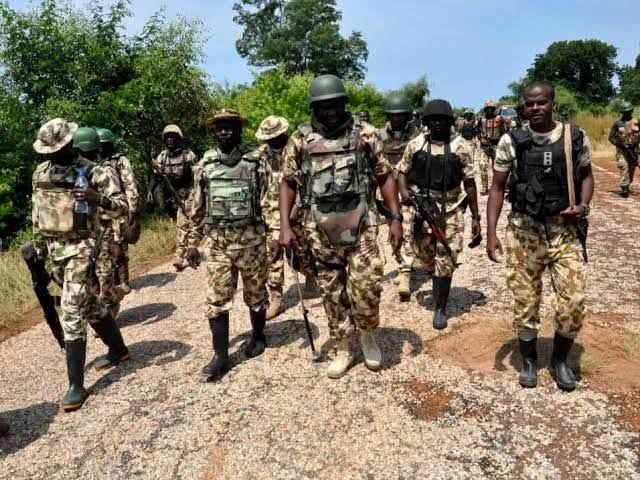
Troops of the Joint Task Force North-West, Operation FANSAN YAMMA, have neutralised three suspected terrorists and recovered weapons, ammunition, a motorcycle and livestock during separate operations in Kaduna and Sokoto states.
The Acting Media Information Officer of the task force, Captain Tamuno Sinivie, disclosed this in a statement issued on Friday.
According to the statement, troops of Sector 1 came under attack from armed men while conducting a fighting patrol along the Shadow–Old Kuyello Road in Birnin Gwari Local Government Area of Kaduna State on October 29, 2026.
The troops reportedly responded with superior firepower, repelled the attack and neutralised three of the suspected terrorists.
Items recovered from the scene included an AK-47 rifle, one magazine, three rounds of ammunition and a motorcycle.
Troops recover 41 livestock in Sokoto
In a separate operation on October 30, troops conducting a routine patrol in Shanono town, Shanono Local Government Area of Sokoto State, recovered 28 cows and 13 sheep suspected to have been abandoned by cattle rustlers.
The statement said the suspected criminals fled after sighting the advancing troops, leaving the animals behind.
It added that arrangements were underway to hand over the recovered livestock to theq appropriate authorities.
The task force urged members of the public to support ongoing security operations by providing timely and credible information to security agencies.
It said public cooperation remained important to efforts aimed at restoring lasting peace and security across the North-West region.
The Daily Reality
FG Directs Hospitals to Strengthen Ebola Preparedness, Equip Isolation Centres
By Sabiu Abdullahi
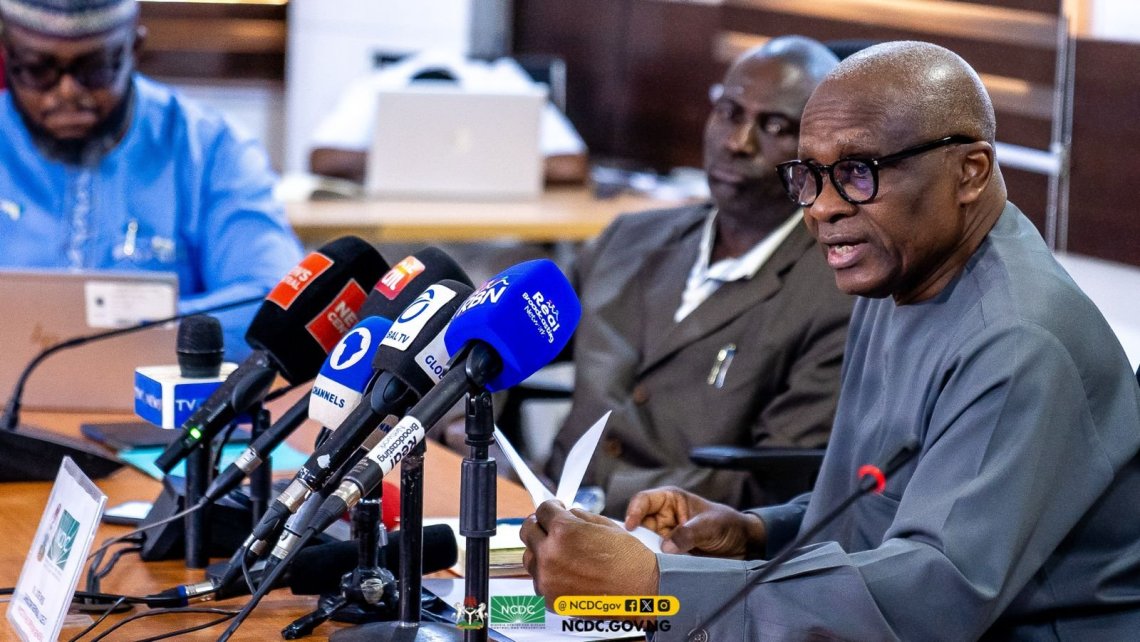
The Federal Government has directed hospitals and other health facilities across Nigeria to strengthen their isolation units and ensure the availability of protective equipment and essential medical supplies as part of efforts to prevent and manage any possible outbreak of Ebola Virus Disease (EVD).
The directive was disclosed by Dr Yunus Mohammed Eze, Deputy Head of Clinical Services at the Federal Medical Centre (FMC), Birnin Kudu, Jigawa State, during an interview with journalists.
Eze said the Federal Ministry of Health had instructed health facilities nationwide to put emergency response arrangements in place to ensure the prompt identification, isolation and management of suspected Ebola cases.
He explained that FMC Birnin Kudu had responded by strengthening its isolation unit and placing healthcare workers on alert.
“The Federal Government, through the Ministry of Health, communicated with health facilities across the country and directed them to prepare their isolation units and ensure that everything required to protect healthcare workers and manage affected patients was available,” he said.
According to him, the hospital management immediately implemented the directive and made arrangements to isolate suspected cases and refer patients to designated treatment centres where necessary.
Hospital intensifies public awareness
Eze said the hospital had also stepped up public health education through its Infectious Diseases Unit and Community Medicine Unit to raise awareness about infectious diseases and preventive practices.
He added that the facility was working with the Jigawa State Media Corporation to educate residents on disease prevention and the importance of promptly reporting suspected cases.
The medical expert further disclosed that healthcare workers regularly educate patients and visitors at the hospital, encouraging them to pass the information on to their families and communities.
The preparedness measures are intended to strengthen Nigeria’s capacity to detect and respond quickly to any suspected Ebola case, while ensuring the safety of healthcare workers and patients.
The Daily Reality
‘Tinubu Government Wants to Kill Me’ – Sowore Alleges After Ekiti Attack
By Sabiu Abdullahi
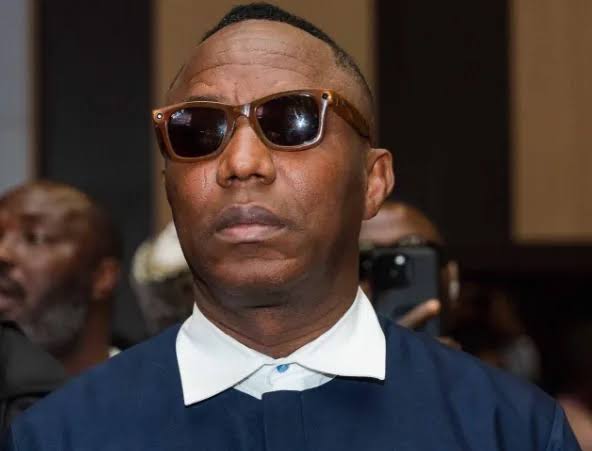
The presidential candidate of the African Action Congress (AAC), Omoyele Sowore, has alleged that his life is in danger, accusing the administration of President Bola Tinubu of targeting him following an attack in Ekiti State.
Sowore made the allegation on Friday during an appearance on Channels Television’s Politics Today, where he spoke about the incident and his concerns over his safety.
He also alleged that the Ekiti State Commissioner of Police knew the individuals responsible for the attack, claiming that the police commissioner visited him and others while they were receiving medical attention.
According to Sowore, some people advised him to leave the area after the police commissioner’s visit because of concerns about the alleged attackers’ connections.
“The Commissioner of Police came to see us while we were being treated, so he knew the people who attacked us. When he left, people were saying that, ‘Sowore, you better leave because Oga knows these people,’” he said.
The activist further alleged that he had previously been subjected to surveillance during a visit to Port Harcourt, Rivers State.
He claimed that a tracking device had been placed under his vehicle and that investigations traced it to the Department of State Services (DSS).
Sowore also referenced his prosecution over comments in which he described President Tinubu as a criminal, arguing that the legal action was part of a broader pattern of government hostility towards him.
“My life is at stake and I have been a threat to the government since I was 20 years old,” he said.
He maintained that the attack in Ekiti was unprovoked and accused the ruling All Progressives Congress (APC) of continuing a pattern of actions against him, recalling his previous detention during the administration of former President Muhammadu Buhari.
Sowore’s allegations have not been independently established in the account of the interview, and no response from the Ekiti State Police Command or the Federal Government was included in the report.
The incident has renewed attention on concerns surrounding the safety of political activists and the treatment of opposition figures in Nigeria.
The Daily Reality
Debt Worse Than Leprosy, Obasanjo Tells Tinubu, Warns of Burden on Future Generations
By Sabiu Abdullahi
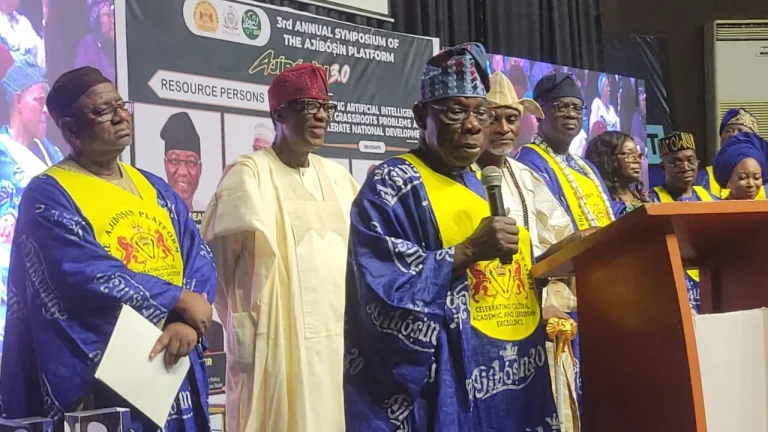
Former President Olusegun Obasanjo has criticised President Bola Tinubu’s defence of government borrowing, describing excessive debt as more damaging than leprosy because its consequences can affect generations yet unborn.
Obasanjo made the remarks on Friday at the third Ajibosin Annual Symposium, held at the amphitheatre of the Olusegun Obasanjo Presidential Library in Abeokuta, Ogun State.
The symposium was themed, “Leveraging Artificial Intelligence to Solve Grassroots Problems and Accelerate National Development.”
Tinubu had recently argued that borrowing was not leprosy, maintaining that his administration was prepared to work hard to repay whatever loans it obtained.
However, Obasanjo dismissed the argument, questioning the country’s growing debt burden and the ability of its leaders to manage the economy.
The former President, who secured a $30 billion Paris Club debt relief for Nigeria during his administration from 1999 to 2007, argued that while leprosy affects an individual, excessive borrowing places the future of entire generations at risk.
“For anybody to say debt is no leprosy is absolute nonsense. Debt is worse than leprosy, because leprosy destroys only one person. Debt destroys generations,” he said.
Obasanjo faults dependence on World Bank, IMF
The former President also criticised the policies of the World Bank and the International Monetary Fund (IMF), arguing that their recommendations were not necessarily designed to advance Nigeria’s development interests.
He questioned why African countries were discouraged from subsidising agriculture while developed countries continued to support their own agricultural sectors.
Obasanjo said Nigeria should develop policies based on its peculiar economic realities rather than blindly adopting recommendations from international financial institutions.
He also expressed concern over what he described as excessive reliance on foreign economic prescriptions, warning that such dependence could undermine the country’s ability to determine its development priorities.
Raises concern over naira depreciation
Obasanjo further lamented the depreciation of the naira, comparing its value against the US dollar when he started his farming business about 47 years ago with its current exchange rate.
He recalled that the naira was stronger than the dollar at the time, questioning how the country had reached a situation where the exchange rate was around ₦1,500 to the dollar.
“What has Nigeria done in 47 years that we now have N1,500 naira to the dollar? What have we done?” he asked.
He also challenged Nigerian leaders to demonstrate their understanding of the country’s economic problems through practical solutions.
Warns against foreign control of artificial intelligence
Obasanjo also cautioned Nigeria and other African countries against adopting artificial intelligence without understanding its implications and ensuring sufficient local control over the technology.
He argued that innovations developed by powerful foreign countries could be exploited against nations that lacked the capacity to regulate and control them.
“I don’t know too much technically about AI. But I know that anything that is not in your control can be abused against you,” he said.
The former President urged Nigeria to determine how artificial intelligence could serve its development priorities instead of allowing foreign interests to dictate the country’s technological direction.
Africa warned against another form of exploitation
Also speaking at the symposium, historian and political commentator, Dr Umar Ardo, warned that Africa could face another form of economic exploitation through artificial intelligence if it failed to control its data, technological infrastructure and intellectual property.
Ardo acknowledged the potential of AI to transform economies and support national development but cautioned that adopting the technology without local ownership and adequate safeguards could reinforce existing economic inequalities.
He traced Africa’s history of economic exploitation from the transatlantic slave trade and colonialism to the post-independence period, arguing that the continent had repeatedly supplied valuable resources while foreign interests controlled the technologies and captured much of the economic benefits.
According to him, the pattern continues today, with African countries exporting raw materials while importing finished products and depending heavily on foreign technology and expertise.
He cited Nigeria’s continued dependence on imported refined petroleum products despite being a major crude oil producer, as well as the reliance of cocoa-producing countries on foreign manufacturers for finished chocolate products.
Ardo warned that data generated from African citizens, businesses, hospitals, farms, languages and public institutions could become another valuable resource extracted and controlled by foreign companies.
He argued that although artificial intelligence presents significant opportunities, Africa must establish ownership of its data and technological infrastructure to benefit fully from the emerging digital economy.
The Daily Reality